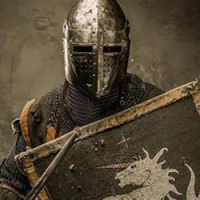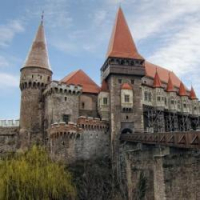

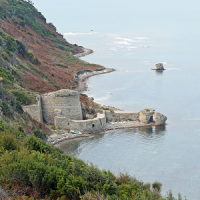

The Crusades (1095–1291, with later expeditions until the 15th century) were a series of military and religious campaigns organized by the Catholic Church and Western European rulers with the goal of returning the Holy Land (Palestine, Jerusalem) to Christian control, defending Byzantine territories from the Seljuks, and expanding Roman influence. The First Crusade was initiated by Pope Urban II, who proclaimed it at the Council of Clermont on November 27, 1095. The call found a response thanks to a combination of religious motives (indulgences, pilgrimage to the Holy Sepulchre), feudal ambitions, and economic interests.
Traditionally, eight main crusades in the East are distinguished, although historians note numerous parallel or "popular" expeditions (the Poor's Crusade, the Children's Crusade), as well as campaigns in Europe (against the Albigensians, in the Baltics). The Crusades led to the creation of the Crusader States (Outremer): the Kingdom of Jerusalem, the Principality of Antioch, and the Counties of Edessa and Tripoli. Their fall in 1291 marked the end of Frankish presence in the Middle East.
The motives of the participants varied: from sincere religious zeal to the desire for land, loot, and glory. Opponents included the Seljuks, Fatimids, Ayyubids (Saladin), Mamluks, and later the Ottomans. The campaigns had a profound impact on trade, culture, military affairs, and relations between Christianity and Islam.
Chronology of the major crusades:
First Crusade (1096–1099).
Call and preparation: 1095, Council of Clermont. Urban II called for Byzantine aid against the Seljuks after the defeat at Manzikert (1071). Participants: The Poor Peasants' March (Peter the Hermit, Walter the Penniless) — peasants and commoners; the main force — knights: Godfrey of Bouillon, Bohemond of Taranto, Raymond IV of Toulouse, Robert of Normandy, Baldwin of Boulogne, and others. Total number — tens of thousands.
Key Events and Battles:
1096 - Defeat of the Poor Peasants' March in Asia Minor.
1097 - Capture of Nicaea (transferred to Byzantium); victory at Dorylaeum over Kilij Arslan I.
1097–1098 - Siege and capture of Antioch (betrayal of Firuz); repulse of Kerbogha's army (June 28, 1098).
1099 - Siege and storming of Jerusalem (July 15); massacre of the population.
August 1099 - The Battle of Ascalon – victory over the Fatimid army.
Results: Success. Establishment of four crusader states. Godfrey of Bouillon became the "Defender of the Holy Sepulchre." Byzantium regained part of Asia Minor.
Second Crusade (1147–1149).
Occasion: The fall of Edessa (1144) to Zengi.
Participants: Conrad III (Germany), Louis VII (France), supported by Pope Eugene III and Bernard of Clairvaux.
Key Events: Crossing Asia Minor; defeat of the Germans at Dorylaeum (1147); unsuccessful siege of Damascus (1148).
Results: Complete failure. Strengthening of the Muslim position (Nur ad-Din). Loss of confidence in the crusade.
Third Crusade (1189–1192).
Occasion: Saladin's capture of Jerusalem after the Battle of Hattin (1187), where many Crusaders were killed or captured.
Participants: Frederick I Barbarossa (Germany, drowned in 1190), Philip II Augustus (France), Richard I the Lionheart (England).
Key events and battles:
1191 - Capture of Acre after a long siege.
1191–1192 - Richard's campaigns along the coast; Battle of Arsuf (victory over Saladin).
Negotiations: Richard did not take Jerusalem, but secured a three-year truce and the right of Christian pilgrimage.
Result: Partial success. Coastal fortresses retained (Acre became the new capital). Saladin retained Jerusalem. Barbarossa died, weakening the German contingent.
Fourth Crusade (1202–1204).
Organizer: Pope Innocent III.
Participants: Knights led by Boniface of Montferrat, Venetians (Doge Enrico Dandolo).
Key Events: Abandonment due to Venice's debts; capture of Christian Zadar (1202); assault and sack of Constantinople (April 1204).
Results: Creation of the Latin Empire (1204–1261). Division of Byzantium. Strengthening of Venetian influence. A sharp deterioration in relations with the Orthodox East. The campaign did not reach the Holy Land.
Fifth Crusade (1217–1221).
Participants: Andrew II of Hungary, Leopold VI of Austria, and later John of Brienne.
Key Events: Actions in Palestine and Egypt; capture of Damietta (1219); unsuccessful attempt to attack Cairo.
Results: Failure. Damietta returned to Muslims by treaty.
Sixth Crusade (1228–1229).
Participant: Emperor Frederick II of Hohenstaufen (excommunicated by the Pope, but acted diplomatically).
Results: Peace treaty with Sultan al-Kamil. Temporary return of Jerusalem, Bethlehem, and Nazareth to Christians (without walls). Frederick crowned King of Jerusalem. The city was lost in 1244 (to the Khwarezmians).
Seventh Crusade (1248–1254).
Participant: Louis IX the Saint (France).
Key events: Landing in Egypt; capture of Damietta; defeat and capture of the king at Mansourah (1250).
Results: Failure. Ransom of Louis and retreat. Strengthening of the Mamluks in Egypt.
The Eighth Crusade (1270).
Participant: Louis IX the Saint (for the second time).
Destination: Tunisia (against the Hafsids).
Results: Louis died of the plague. Failure. Prince Edward's (the future Edward I of England) campaign to the Holy Land (the Ninth, 1271–1272) also failed to achieve significant results.
The Fall of Acre (1291) – a siege by the Mamluk Sultan al-Ashraf Khalil – marked the end of the Crusader states on the mainland. The last strongholds (Tyre, Sidon, Beirut) fell soon after.
Other related campaigns:
March of the Poor (1096): Defeated by the Seljuks.
Children's Crusade (1212): A tragedy; participants sold into slavery or perished. Albigensian Crusade (1209–1229): Against the Cathars in southern France.
Northern Crusades: Against the pagan Baltic states (Teutonic and Livonian Orders).
Later campaigns against the Ottomans (Nikopol 1396, Varna 1444) and the Hussites.
General Results and Consequences.
The Crusades did not achieve the long-term goal of holding the Holy Land, but:
They contributed to the development of trade (Venetians, Genoese).
They accelerated the decline of Byzantium and the growth of the Ottoman threat.
They influenced military affairs (fortification, tactics), medicine, and culture (mutual exchange of knowledge).
They deepened the schism between Catholics and Orthodox.
In Europe, they strengthened the role of the papacy and the knightly orders (Knights Templar, Hospitallers, Teutons).
Modern historiography emphasizes the multifaceted nature of the phenomenon: not only religious wars, but also colonization, economic, and political processes. The Crusades remain a symbol of the clash of civilizations, although their interpretation ranges from a heroic narrative to a critique of violence.
Primary sources:
Riley-Smith, Jonathan. The Crusades: A History.
Asbridge, Thomas. The Crusades: The Authoritative History.
Mayer, Hans Eberhard. Works on the Latin States of the East.
Russian-language sources: Uspensky, F.I., "History of the Crusades"; Wikipedia and encyclopedic overviews (based on primary chronicles: Anna Comnena, William of Tyre, Ibn al-Athir, and others).